The Shamanic View of Mental Illness
In the shamanic view, mental illness signals “the birth of a healer,” explains Malidoma Patrice Somé. Thus, mental disorders are spiritual emergencies, spiritual crises, and need to be regarded as such to aid the healer in being born.
What those in the West view as mental illness, the Dagara people regard as “good news from the other world.” The person going through the crisis has been chosen as a medium for a message to the community that needs to be communicated from the spirit realm. “Mental disorder, behavioral disorder of all kinds, signal the fact that two obviously incompatible energies have merged into the same field,”says Dr. Somé. These disturbances result when the person does not get assistance in dealing with the presence of the energy from the spirit realm.
One of the things Dr. Somé encountered when he first came to the United States in 1980 for graduate study was how this country deals with mental illness. When a fellow student was sent to a mental institute due to “nervous depression,” Dr. Somé went to visit him.
“I was so shocked. That was the first time I was brought face to face with what is done here to people exhibiting the same symptoms I’ve seen in my village.” What struck Dr. Somé was that the attention given to such symptoms was based on pathology, on the idea that the condition is something that needs to stop. This was in complete opposition to the way his culture views such a situation. As he looked around the stark ward at the patients, some in straitjackets, some zoned out on medications, others screaming, he observed to himself, “So this is how the healers who are attempting to be born are treated in this culture. What a loss! What a loss that a person who is finally being aligned with a power from the other world is just being wasted.”
Another way to say this, which may make more sense to the Western mind, is that we in the West are not trained in how to deal or even taught to acknowledge the existence of psychic phenomena, the spiritual world. In fact, psychic abilities are denigrated. When energies from the spiritual world emerge in a Western psyche, that individual is completely unequipped to integrate them or even recognize what is happening. The result can be terrifying. Without the proper context for and assistance in dealing with the breakthrough from another level of reality, for all practical purposes, the person is insane. Heavy dosing with anti-psychotic drugs compounds the problem and prevents the integration that could lead to soul development and growth in the individual who has received these energies.
On the mental ward, Dr Somé saw a lot of “beings”hanging around the patients, “entities” that are invisible to most people but that shamans and psychics are able to see. “They were causing the crisis in these people,” he says. It appeared to him that these beings were trying to get the medications and their effects out of the bodies of the people the beings were trying to merge with, and were increasing the patients’ pain in the process. “The beings were acting almost like some kind of excavator in the energy field of people. They were really fierce about that. The people they were doing that to were just screaming and yelling,” he said. He couldn’t stay in that environment and had to leave.
In the Dagara tradition, the community helps the person reconcile the energies of both worlds–”the world of the spirit that he or she is merged with, and the village and community.” That person is able then to serve as a bridge between the worlds and help the living with information and healing they need. Thus, the spiritual crisis ends with the birth of another healer. “The other world’s relationship with our world is one of sponsorship,” Dr. Somé explains. “More often than not, the knowledge and skills that arise from this kind of merger are a knowledge or a skill that is provided directly from the other world.”
The beings who were increasing the pain of the inmates on the mental hospital ward were actually attempting to merge with the inmates in order to get messages through to this world. The people they had chosen to merge with were getting no assistance in learning how to be a bridge between the worlds and the beings’ attempts to merge were thwarted. The result was the sustaining of the initial disorder of energy and the aborting of the birth of a healer.
“The Western culture has consistently ignored the birth of the healer,” states Dr. Somé. “Consequently, there will be a tendency from the other world to keep trying as many people as possible in an attempt to get somebody’s attention. They have to try harder.” The spirits are drawn to people whose senses have not been anesthetized. “The sensitivity is pretty much read as an invitation to come in,” he notes.
Those who develop so-called mental disorders are those who are sensitive, which is viewed in Western culture as oversensitivity. Indigenous cultures don’t see it that way and, as a result, sensitive people don’t experience themselves as overly sensitive. In the West, “it is the overload of the culture they’re in that is just wrecking them,” observes Dr. Somé. The frenetic pace, the bombardment of the senses, and the violent energy that characterize Western culture can overwhelm sensitive people.
SCHIZOPHRENIA AND FOREIGN ENERGY - With schizophrenia, there is a special “receptivity to a flow of images and information, which cannot be controlled,” stated Dr. Somé. “When this kind of rush occurs at a time that is not personally chosen, and particularly when it comes with images that are scary and contradictory, the person goes into a frenzy.”
What is required in this situation is first to separate the person’s energy from the extraneous foreign energies, by using shamanic practice (what is known as a “sweep”) to clear the latter out of the individual’s aura. With the clearing of their energy field, the person no longer picks up a flood of information and so no longer has a reason to be scared and disturbed, explains Dr. Somé.
Then it is possible to help the person align with the energy of the spirit being attempting to come through from the other world and give birth to the healer. The blockage of that emergence is what creates problems. “The energy of the healer is a high-voltage energy,” he observes. “When it is blocked, it just burns up the person. It’s like a short-circuit. Fuses are blowing. This is why it can be really scary, and I understand why this culture prefers to confine these people. Here they are yelling and screaming, and they’re put into a straitjacket. That’s a sad image.” Again, the shamanic approach is to work on aligning the energies so there is no blockage, “fuses” aren’t blowing, and the person can become the healer they are meant to be.
It needs to be noted at this point, however, that not all of the spirit beings that enter a person’s energetic field are there for the purposes of promoting healing. There are negative energies as well, which are undesirable presences in the aura. In those cases, the shamanic approach is to remove them from the aura, rather than work to align the discordant energies
ALEX: CRAZY IN THE USA, HEALER IN AFRICA - To test his belief that the shamanic view of mental illness holds true in the Western world as well as in indigenous cultures, Dr. Somé took a mental patient back to Africa with him, to his village. “I was prompted by my own curiosity to find out whether there’s truth in the universality that mental illness could be connected with an alignment with a being from another world,” says Dr. Somé.
Alex was an 18-year-old American who had suffered a psychotic break when he was 14. He had hallucinations, was suicidal, and went through cycles of dangerously severe depression. He was in a mental hospital and had been given a lot of drugs, but nothing was helping. “The parents had done everything–unsuccessfully,” says Dr. Somé. “They didn’t know what else to do.”
With their permission, Dr. Somé took their son to Africa. “After eight months there, Alex had become quite normal, Dr. Somé reports. He was even able to participate with healers in the business of healing; sitting with them all day long and helping them, assisting them in what they were doing with their clients . . . . He spent about four years in my village.” Alex stayed by choice, not because he needed more healing. He felt, “much safer in the village than in America.”
To bring his energy and that of the being from the spiritual realm into alignment, Alex went through a shamanic ritual designed for that purpose, although it was slightly different from the one used with the Dagara people. “He wasn’t born in the village, so something else applied. But the result was similar, even though the ritual was not literally the same,” explains Dr. Somé. The fact that aligning the energy worked to heal Alex demonstrated to Dr. Somé that the connection between other beings and mental illness is indeed universal.
After the ritual, Alex began to share the messages that the spirit being had for this world. Unfortunately, the people he was talking to didn’t speak English (Dr. Somé was away at that point). The whole experience led, however, to Alex’s going to college to study psychology. He returned to the United States after four years because “he discovered that all the things that he needed to do had been done, and he could then move on with his life.”
The last that Dr. Somé heard was that Alex was in graduate school in psychology at Harvard. No one had thought he would ever be able to complete undergraduate studies, much less get an advanced degree.
Dr. Somé sums up what Alex’s mental illness was all about: “He was reaching out. It was an emergency call. His job and his purpose was to be a healer. He said no one was paying attention to that.”
After seeing how well the shamanic approach worked for Alex, Dr. Somé concluded that spirit beings are just as much an issue in the West as in his community in Africa. “Yet the question still remains, the answer to this problem must be found here, instead of having to go all the way overseas to seek the answer. There has to be a way in which a little bit of attention beyond the pathology of this whole experience leads to the possibility of coming up with the proper ritual to help people.
LONGING FOR SPIRITUAL CONNECTION - A common thread that Dr. Somé has noticed in “mental” disorders in the West is “a very ancient ancestral energy that has been placed in stasis, that finally is coming out in the person.” His job then is to trace it back, to go back in time to discover what that spirit is. In most cases, the spirit is connected to nature, especially with mountains or big rivers, he says.
In the case of mountains, as an example to explain the phenomenon, “it’s a spirit of the mountain that is walking side by side with the person and, as a result, creating a time-space distortion that is affecting the person caught in it.” What is needed is a merger or alignment of the two energies, “so the person and the mountain spirit become one.” Again, the shaman conducts a specific ritual to bring about this alignment.
Dr. Somé believes that he encounters this situation so often in the United States because “most of the fabric of this country is made up of the energy of the machine, and the result of that is the disconnection and the severing of the past. You can run from the past, but you can’t hide from it.” The ancestral spirit of the natural world comes visiting. “It’s not so much what the spirit wants as it is what the person wants,”he says. “The spirit sees in us a call for something grand, something that will make life meaningful, and so the spirit is responding to that.”
That call, which we don’t even know we are making, reflects “a strong longing for a profound connection, a connection that transcends materialism and possession of things and moves into a tangible cosmic dimension. Most of this longing is unconscious, but for spirits, conscious or unconscious doesn’t make any difference.” They respond to either.
As part of the ritual to merge the mountain and human energy, those who are receiving the “mountain energy” are sent to a mountain area of their choice, where they pick up a stone that calls to them. They bring that stone back for the rest of the ritual and then keep it as a companion; some even carry it around with them. “The presence of the stone does a lot in tuning the perceptive ability of the person,” notes Dr. Somé. “They receive all kinds of information that they can make use of, so it’s like they get some tangible guidance from the other world as to how to live their life.”
When it is the “river energy,” those being called go to the river and, after speaking to the river spirit, find a water stone to bring back for the same kind of ritual as with the mountain spirit.
“People think something extraordinary must be done in an extraordinary situation like this,” he says. That’s not usually the case. Sometimes it is as simple as carrying a stone.
A SACRED RITUAL APPROACH TO MENTAL ILLNESS - One of the gifts a shaman can bring to the Western world is to help people rediscover ritual, which is so sadly lacking. “The abandonment of ritual can be devastating. From the spiritual view, ritual is inevitable and necessary if one is to live,” Dr. Somé writes in Ritual: Power, Healing, and Community. “To say that ritual is needed in the industrialized world is an understatement. We have seen in my own people that it is probably impossible to live a sane life without it.”
Dr. Somé did not feel that the rituals from his traditional village could simply be transferred to the West, so over his years of shamanic work here, he has designed rituals that meet the very different needs of this culture. Although the rituals change according to the individual or the group involved, he finds that there is a need for certain rituals in general.
One of these involves helping people discover that their distress is coming from the fact that they are “called by beings from the other world to cooperate with them in doing healing work.” Ritual allows them to move out of the distress and accept that calling.
Another ritual need relates to initiation. In indigenous cultures all over the world, young people are initiated into adulthood when they reach a certain age. The lack of such initiation in the West is part of the crisis that people are in here, says Dr. Somé. He urges communities to bring together “the creative juices of people who have had this kind of experience, in an attempt to come up with some kind of an alternative ritual that would at least begin to put a dent in this kind of crisis.”
Another ritual that repeatedly speaks to the needs of those coming to him for help entails making a bonfire, and then putting into the bonfire “items that are symbolic of issues carried inside the individuals . . . It might be the issues of anger and frustration against an ancestor who has left a legacy of murder and enslavement or anything, things that the descendant has to live with,” he explains. “If these are approached as things that are blocking the human imagination, the person’s life purpose, and even the person’s view of life as something that can improve, then it makes sense to begin thinking in terms of how to turn that blockage into a roadway that can lead to something more creative and more fulfilling.”
The example of issues with an ancestors touches on rituals designed by Dr. Somé that address a serious dysfunction in Western society and in the process “trigger enlightenment” in participants. These are ancestral rituals, and the dysfunction they are aimed at is the mass turning-of-the-back on ancestors. Some of the spirits trying to come through, as described earlier, may be “ancestors who want to merge with a descendant in an attempt to heal what they weren’t able to do while in their physical body.”
“Unless the relationship between the living and the dead is in balance, chaos ensues,” he says. “The Dagara believe that, if such an imbalance exists, it is the duty of the living to heal their ancestors. If these ancestors are not healed, their sick energy will haunt the souls and psyches of those who are responsible for helping them.” The rituals focus on healing the relationship with our ancestors, both specific issues of an individual ancestor and the larger cultural issues contained in our past. Dr. Somé has seen extraordinary healing occur at these rituals.
Taking a sacred ritual approach to mental illness rather than regarding the person as a pathological case gives the person affected–and indeed the community at large–the opportunity to begin looking at it from that vantage point too, which leads to “a whole plethora of opportunities and ritual initiative that can be very, very beneficial to everyone present,” states. Dr. Somé.
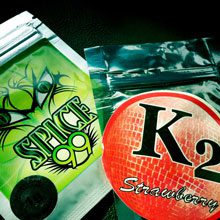 Hospitals across the country have been reporting hundreds of cases of seriously ill people coming to the emergency room after using synthetic marijuana. In New York City, more than 120 cases were reported in a single week, according to NPR.


 I have spent most of my sobriety in fluctuating states of change and transformation, while trying to remain grounded and balanced – another great paradox of recovery. I have gained professional experience and as a result of living a program of recovery have become a respected member of my community and society as a whole.